
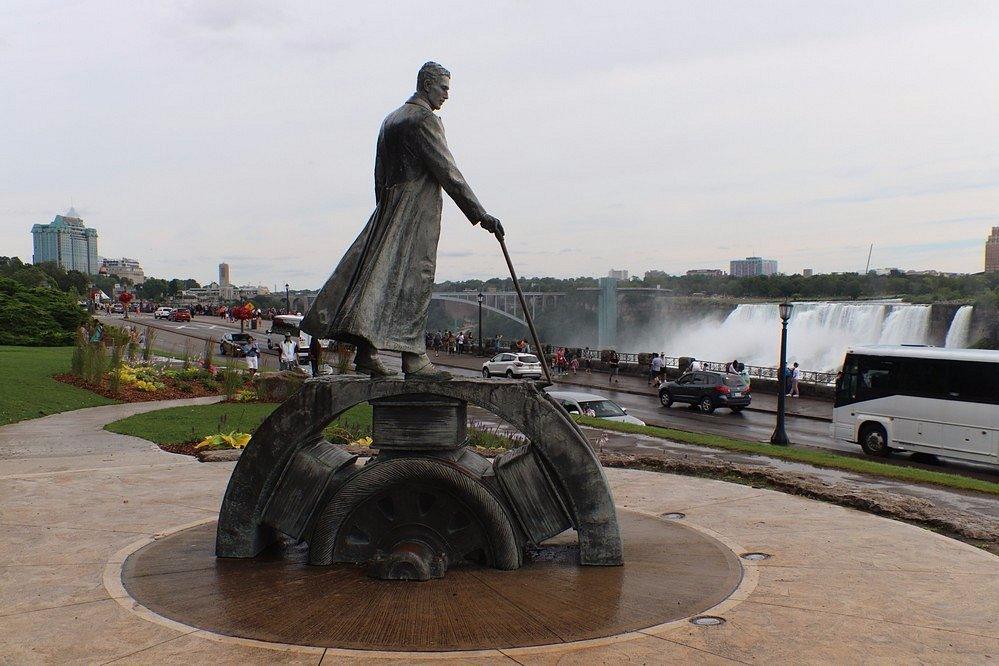
Electricity History
Adel Home Services explores the evolution of electricity
- Ancient Greeks discovered static electricity using amber.
- Benjamin Franklin proved lightning is electrical in the 1700s.
- Alessandro Volta invented the first battery in 1800.
- Thomas Edison and Nikola Tesla advanced electric power systems in the late 1800s.
Electricity is one of the most important parts of modern life, powering everything from lighting and appliances to smart home technology. Today, it is difficult to imagine homes or businesses operating without electricity, yet widespread everyday use only became common a little over a century ago.
- Electricity in the Early Days
- The War of the Currents
- The Evolution of Wiring and Electrical Components
- Electricity in the Modern Era
- The Future of Electricity
Back in 1752, when Benjamin Franklin carried out his famous kite experiment proving lightning was electrical, people could hardly imagine the impact electricity would eventually have on homes, businesses, transportation, and communication systems around the world.
Timeline of Key Electricity Milestones
Nikola Tesla’s achievements were part of a much larger journey in the history of electricity. Over centuries, scientists and inventors helped shape the modern electrical systems we rely on today.
| Year | Milestone |
|---|---|
| 600 BC | Ancient Greeks discover static electricity using amber. |
| 1600 | William Gilbert distinguishes between static electricity and magnetism. |
| 1752 | Benjamin Franklin’s kite experiment proves lightning is electrical. |
| 1800 | Alessandro Volta creates the first chemical battery (voltaic pile). |
| 1831 | Michael Faraday discovers electromagnetic induction, the principle behind generators. |
| 1879 | Thomas Edison and Joseph Swan independently develop the first practical incandescent light bulbs. |
| 1888 | Nikola Tesla patents the AC induction motor. |
| 1896 | Niagara Falls Power Plant begins sending AC power to Buffalo, New York. |
| 1947 | The transistor is invented at Bell Labs, launching the modern electronics era. |
Electricity in the Early Days
The earliest records in the history of electricity date back to around 500 B.C. when Thales of Miletus discovered static electricity by rubbing amber with fur. Centuries later, in the 1600s, English scientist William Gilbert introduced some of the first scientific theories about electricity in his book De Magnete. Later, Robert Boyle continued the study of electricity and published additional findings about electrical generation and attraction.
During the early 1700s, English scientist Francis Hauksbee experimented with electrical attraction and created a glowing glass sphere that produced enough light to read by. His work later inspired developments in neon and gas-discharge lighting.
In September 1882, a home in Appleton, Wisconsin became the first American house powered by hydroelectricity using Thomas Edison’s direct current (DC) electrical system. This marked the beginning of widespread residential electricity use.
The War of the Currents
Before electricity became common in homes, Thomas Edison’s direct current (DC) system was the standard method of electrical distribution in the United States. However, Nikola Tesla believed alternating current (AC) was more efficient because it could transfer electricity across much greater distances using transformers.
George Westinghouse supported Tesla’s AC system, leading to the famous “War of the Currents” between AC and DC power systems. The rivalry reached its peak during the 1893 Chicago World’s Fair when Westinghouse successfully powered the event using Tesla’s AC technology.
Eventually, alternating current became the national standard because it was more cost-effective and practical for supplying electricity over large areas.
The Evolution of Wiring and Electrical Components
Early electrical systems used bare copper wiring with very limited insulation. Electrical sockets, switches, and fuse blocks were often made from wood, and homes lacked many of the safety systems we rely on today.
Between 1890 and 1910, knob-and-tube wiring became common in homes. These systems used rubber-insulated wires that deteriorated over time. During the 1920s and 1940s, armored electrical cables and metal conduits became more widely used, helping improve electrical safety.
In the early days, electrical systems were far more dangerous because homes lacked grounded wiring. Damaged wires could easily lead to fires or serious electrical shock hazards.
After 1965, grounded electrical systems became standard, helping redirect stray electrical current safely into the ground. Modern homes now also use circuit breakers and GFCI outlets to provide additional protection against overloads and electrical accidents.
Electricity in the Modern Era
Well into the 20th century, many homes still relied on gas lamps for lighting. By 1925, only about half of American homes had electricity. Following the Rural Electrification Act of 1936, electrical power rapidly expanded across the country, and by 1960 nearly all homes had access to electricity.
Initially, electricity was mainly used for lighting. However, as refrigerators, washing machines, vacuum cleaners, and household appliances became more popular during the 1950s, electrical demand increased significantly.
Today’s homes rely heavily on modern electrical systems capable of powering smart devices, entertainment systems, HVAC equipment, kitchen appliances, and electric vehicle chargers. Safe wiring and properly upgraded electrical panels are now more important than ever.
The Future of Electricity
Renewable energy continues to grow rapidly as one of the leading sources of electricity production. Solar panels, wind energy, hydroelectric power, and battery storage technology are transforming how electricity is generated and distributed.
At the same time, direct current (DC) power is becoming more common again through technologies like LED lighting, computers, battery storage systems, and electric vehicles. Engineers are also developing new methods to improve energy efficiency and integrate renewable energy directly into modern electrical grids.
As homes become smarter and more energy-efficient, demand for advanced electrical systems and professional electrical services will continue to increase in the future.
Contact Adel Home Services
The history of electricity is fascinating, and electrical technology continues to evolve every year. Whether you need electrical panel upgrades, wiring installation, ceiling fan installation, lighting upgrades, outlet repairs, or home electrical inspections, Adel Home Services is here to help keep your home safe, modern, and energy-efficient.
FAQ
When was electricity invented?
Electricity was not invented because it naturally exists in the world around us. However, scientists began studying and harnessing electricity during the 18th century through experiments and inventions like Benjamin Franklin’s kite experiment and Alessandro Volta’s battery.
Who discovered electricity?
Many scientists contributed to the understanding of electricity. Ancient Greeks first observed static electricity, while inventors like Benjamin Franklin, Michael Faraday, Nikola Tesla, and Thomas Edison helped develop modern electrical systems.
How was electricity first used?
The earliest uses of electricity included experiments, batteries, telegraphs, and lighting systems. Eventually, electricity powered homes, businesses, and streetlights during the late 19th century.
When did homes start using electricity?
Electricity became more common in homes during the early 1900s. By the mid-20th century, most homes in the United States had electrical power for lighting and appliances.
What was the first electrical invention?
One of the first electrical inventions was the Leyden jar, an early device capable of storing electrical charge. Later inventions like generators, light bulbs, and electrical panels transformed modern life.
How has electricity changed over time?
Electricity has evolved from simple static electricity experiments to advanced smart home systems, renewable energy solutions, and energy-efficient technologies used in modern homes and businesses today.
Who invented the light bulb?
Thomas Edison is widely known for improving the practical light bulb, although inventors such as Humphry Davy and Joseph Swan also contributed to its development.
How does electricity reach our homes today?
Electricity is generated at power plants and transmitted through high-voltage electrical lines before being distributed to homes and businesses through local utility systems and electrical panels.
What are some major electrical safety advancements?
Grounded wiring, GFCI outlets, circuit breakers, surge protection, and modern electrical panels have significantly improved electrical safety and reduced fire and shock risks in homes.
Where can I learn more about home electrical services?
For expert help with electrical panel upgrades, electrical wiring, lighting installation, ceiling fan installation, outlet repairs, and electrical inspections, contact Adel Home Services today.